Reducing sugar sounds simple.
In reality, it’s one of the most complex challenges in food development.
Consumers increasingly expect products with less added sugar, cleaner labels and more natural ingredients. At the same time, they still expect the same depth of flavor, balanced sweetness and satisfying eating experience. For food manufacturers, reducing sugar is rarely about removing a single ingredient. It means rethinking how flavor is built from the ground up.
Nowhere is this more evident than in savory foods.
Sugar does more than add sweetness
In sauces, dressings, marinades and ready-to-use products, sugar performs multiple functions.
It contributes sweetness, but also influences body, color, mouthfeel and overall flavor balance. Removing it without considering the wider formulation can affect everything from sensory performance to processing stability and shelf life.
That’s why successful reformulation isn’t about finding a direct replacement.
It’s about understanding how every ingredient contributes to the final product and rebuilding that balance in a different way.
Looking beyond traditional sugar alternatives
As manufacturers look for cleaner labels and more natural formulations, innovation is moving beyond artificial sweeteners and one-to-one sugar replacements.
Increasingly, product developers are exploring ingredients that naturally contribute sweetness while adding flavor complexity, texture and culinary character.
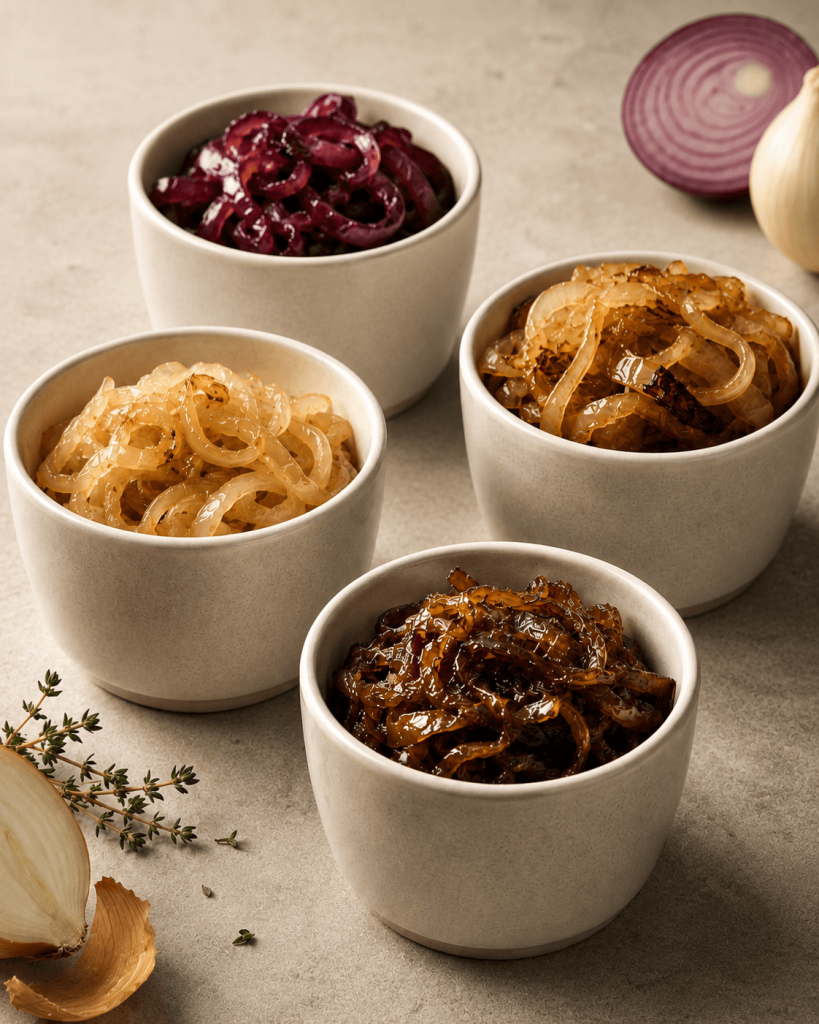
Caramelized onions are one example.
Their naturally occurring sugars, developed through cooking, create a rich savoury sweetness that complements many food applications. Rather than simply replacing sugar, they help build a more rounded flavor profile while supporting cleaner-label formulations.
Innovation starts with understanding the whole recipe
The most successful reformulation projects rarely focus on a single ingredient.
They begin by understanding the product as a whole, how ingredients interact, how consumers experience flavor, how products behave during processing and how every formulation choice affects nutrition, cost, sustainability and scalability.
This broader perspective is changing how food innovation happens.
Instead of asking, “How do we replace sugar?”, manufacturers are increasingly asking, “How do we create the same eating experience in a different way?”
That’s a fundamentally different challenge.
Turning natural ingredients into commercial solutions
At Solina, this thinking shapes how we approach product development.
By combining culinary expertise with technical know-how, we help manufacturers explore how natural ingredients such as onion can contribute far more than flavor alone. Our ready-to-use onion solutions help build sweetness, body and depth while supporting cleaner labels, efficient processing and consistent manufacturing performance. With more than 160 recipe variations, they can be tailored to different textures, flavor profiles and applications, giving manufacturers greater flexibility as they reformulate products.
Because successful sugar reduction isn’t measured by how much sugar is removed.
It’s measured by whether consumers still love the product.